
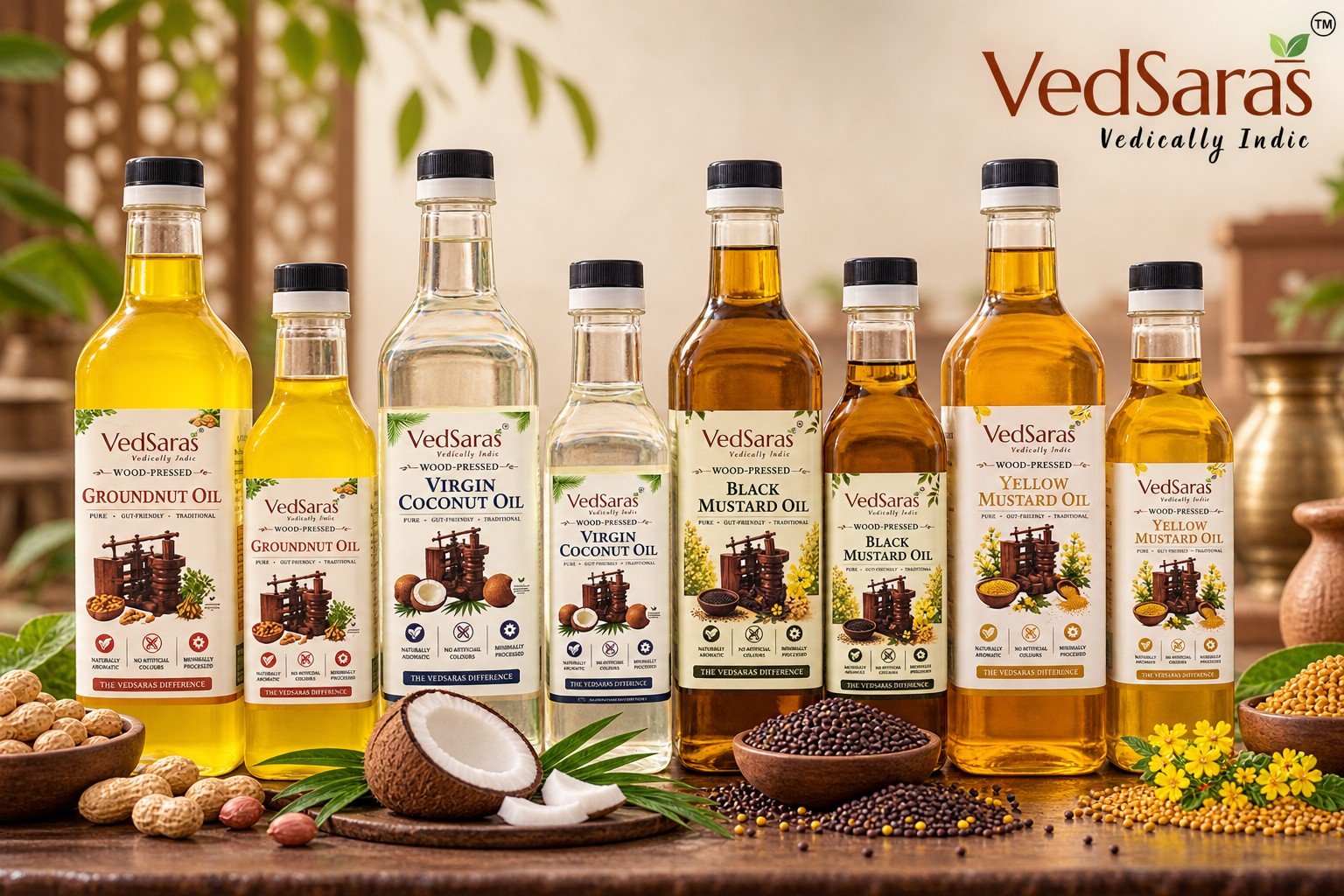
Many Indian families use one oil for everything, year after year. But different oils bring different fatty-acid profiles, flavours and strengths. Using more than one is a simple, sensible habit.
Every oil has a different profile
From our own labels, per the nutrition panel:
| Oil | Saturated | MUFA | PUFA |
|---|---|---|---|
| Black Mustard | 8.79 g | 61.4 g | 25.7 g |
| Yellow Mustard | 6.5 g | 68.6 g | 24.7 g |
| Groundnut | 17.8 g | 54.2 g | 27.6 g |
| Virgin Coconut | 91.5 g | 6.1 g | 1.4 g |
No single oil has a “perfect” profile. Using a mix across the week naturally balances things out — an approach long encouraged in Indian nutrition guidance.
A simple rotation plan
- Mustard oil for high-heat tadka, pickles and frying.
- Groundnut oil for everyday sabzis and snacks.
- Virgin coconut oil occasionally, for South Indian dishes and sweets.
Variety in flavour too
Rotation is not just about nutrition. A Bengali fish curry in mustard oil, a Gujarati thepla in groundnut oil and a Kerala avial in coconut oil each taste the way they are meant to.
Remember: moderation first
Variety works best alongside moderation. Measure, don’t pour, and keep total fat within sensible limits.
This article is for general information only and is not medical advice. VedSaras products are food items and are not intended to diagnose, treat, cure or prevent any disease. For personal dietary advice, please consult a qualified doctor or nutritionist.
Leave a Reply