India does not have one cooking oil — it has a map of them. What sizzles in the kadhai depends on what grows nearby, and on centuries of regional taste.
The mustard belt: North and East
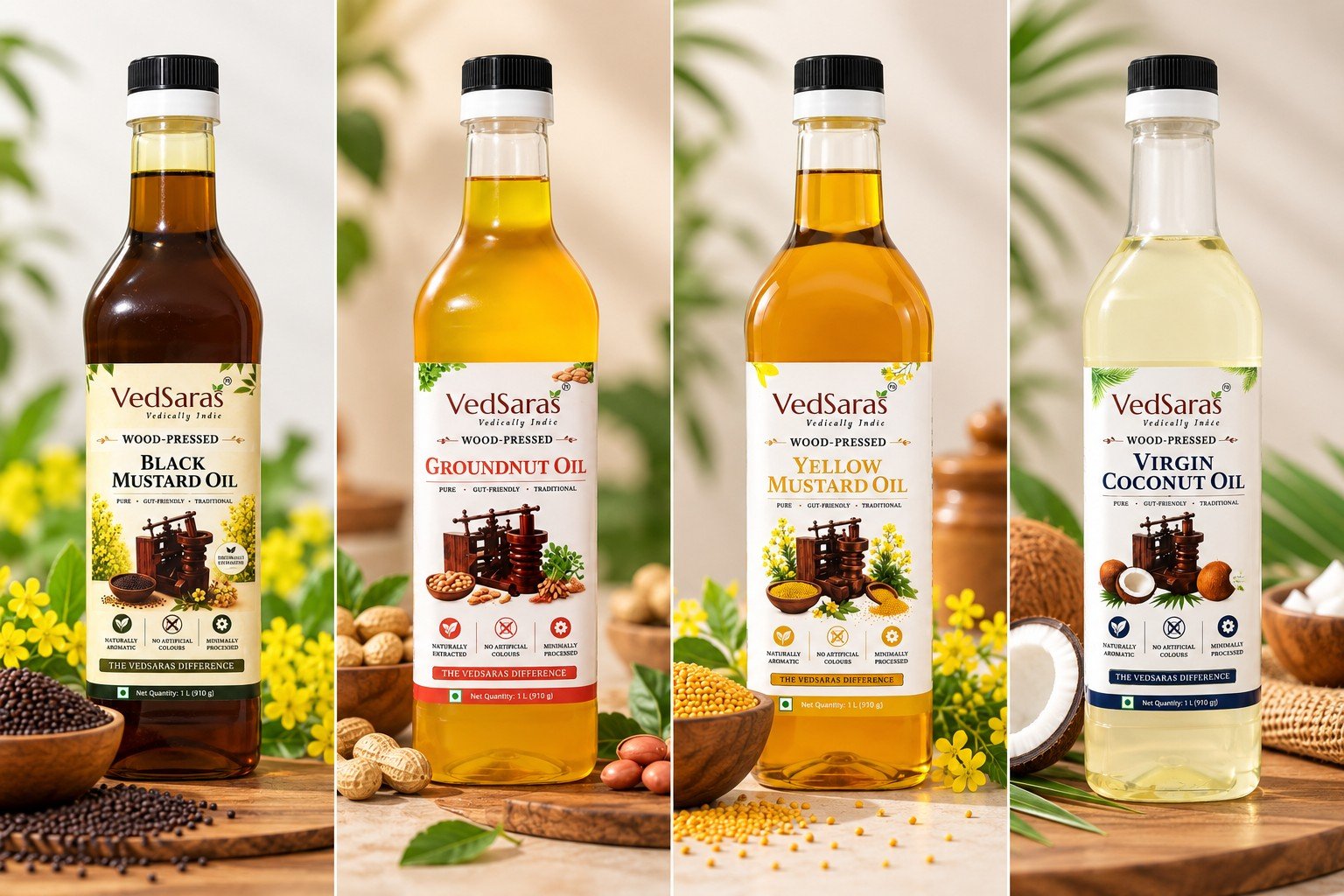
From Punjab and Uttar Pradesh through Bihar to Bengal, Odisha and Assam, mustard oil rules. Its sharp pungency defines Bengali maacher jhol, Punjabi sarson ka saag, Bihari litti-chokha accompaniments, Kashmiri dishes and countless pickles.
The groundnut heartland: West and Deccan
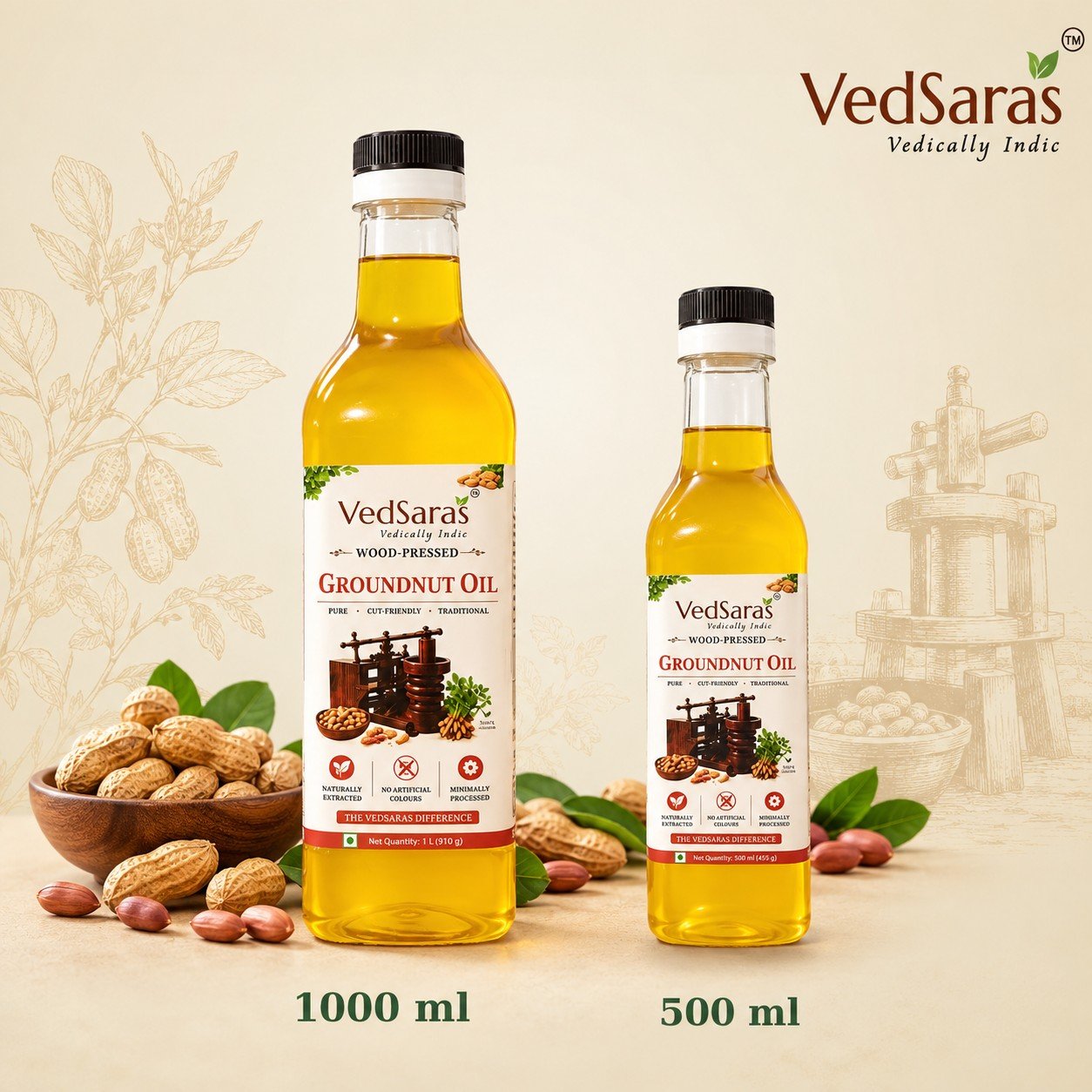
In Gujarat, Maharashtra and parts of Andhra Pradesh, Karnataka and Rajasthan, groundnut oil is the everyday choice — for farsan, thepla, poha, bhakri and festive frying.
The coconut coast: Kerala and the Konkan
Along the Kerala coast and parts of coastal Karnataka, Goa and the Konkan, coconut oil gives food its signature fragrance — avial, thoran, appam stews and seafood curries.
The sesame south
Tamil Nadu and parts of Karnataka and Andhra have a long tradition of gingelly (sesame) oil, especially for pickles and podis.
What the map teaches us
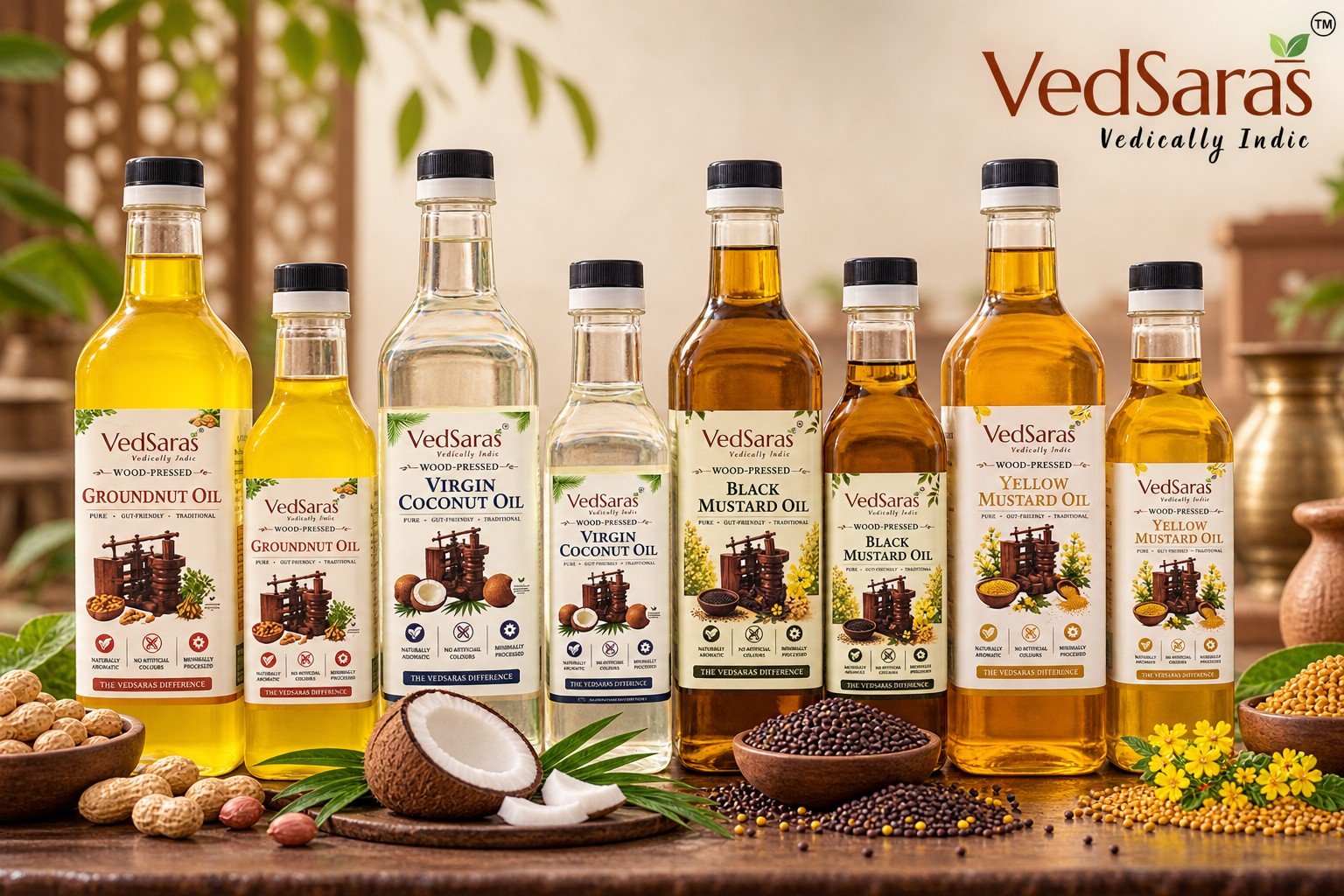
Traditional diets used what was local and fresh, and they used oils that suited their cooking styles. Today we can borrow from every region — a little mustard, a little groundnut, a little coconut — and enjoy the best of India’s food heritage in one kitchen.